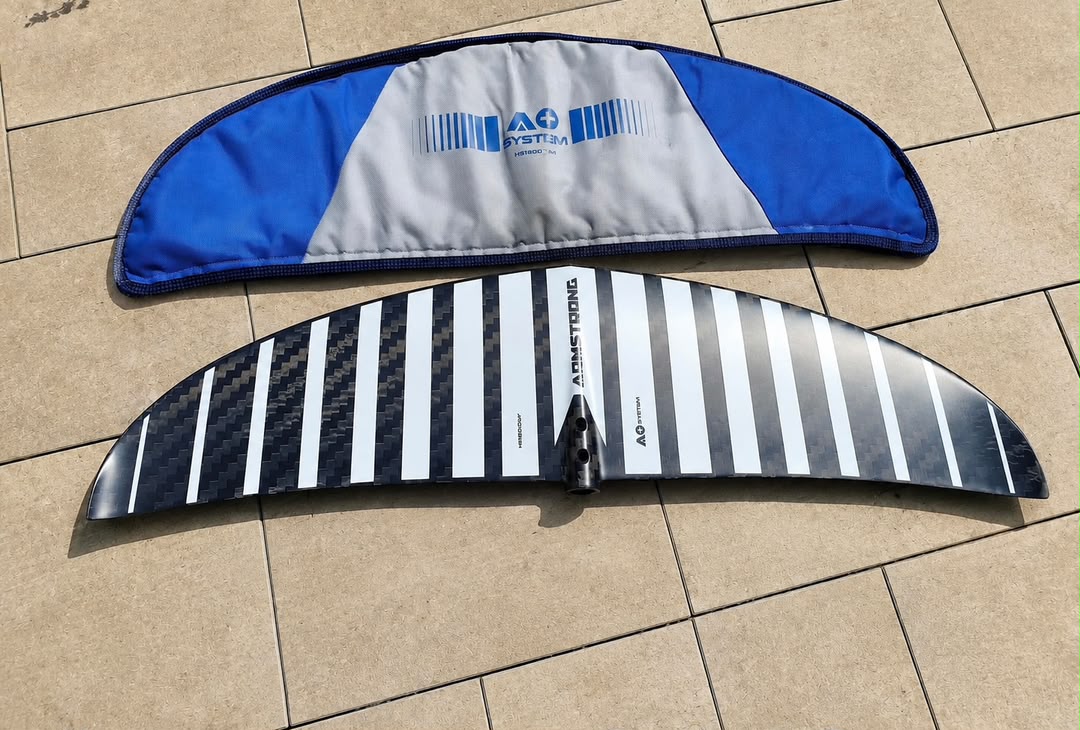
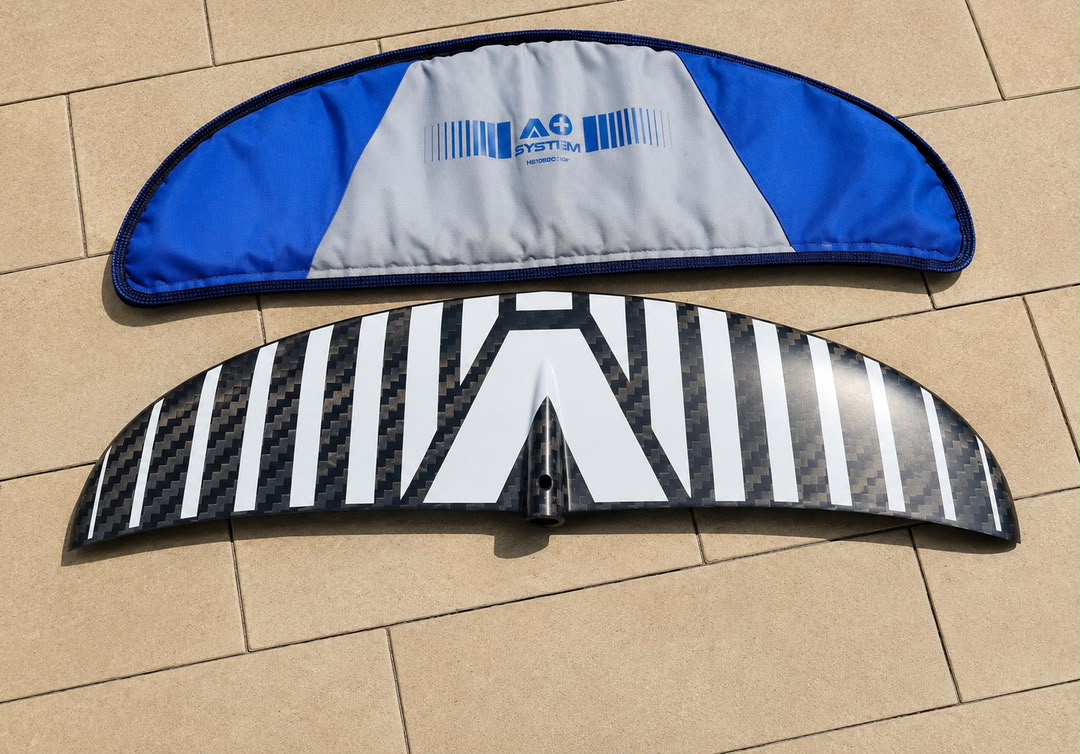
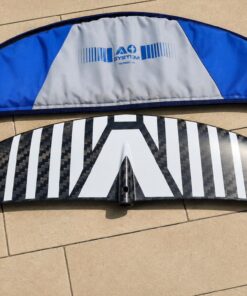
USED ARMSTRONG HS1850 A+
€200.00
The Used Armstrong HS1850 A+ represents one of the most versatile high-aspect front wings ever produced by Armstrong Foils. Designed to deliver exceptional glide, impressive efficiency, predictable lift generation, and remarkable stability across multiple foiling disciplines, this wing has earned a reputation among riders who demand dependable performance in varying water conditions.
Whether you are progressing from your first larger front wing or searching for a reliable performance foil that bridges the gap between beginner-friendly stability and advanced efficiency, the Armstrong HS1850 A+ continues to be a highly respected option. From wing foiling sessions in light winds to extended downwind adventures, from SUP foiling exploration to surf foil performance, this wing offers a broad operating range that keeps riders on the water longer.
Its carefully engineered high-aspect profile creates excellent forward projection while maintaining smooth control throughout turns. As a result, riders experience reduced drag, increased pumping efficiency, and longer glides between power sources. Furthermore, the Armstrong ecosystem allows compatibility with multiple setups, making it easier to adapt the foil to different disciplines and rider preferences.
USED ARMSTRONG HS1850 A+ – HIGH-ASPECT FRONT FOIL FOR EFFICIENT GLIDE, STABILITY, AND ALL-AROUND FOILING PERFORMANCE
Why the Used Armstrong HS1850 A+ Remains One of the Most Sought-After High Aspect Front Wings
What Makes the Armstrong HS1850 A+ Special?
The Armstrong HS1850 A+ occupies a unique position within the Armstrong foils lineup because it balances efficiency, lift generation, stability, and maneuverability exceptionally well. While many high-aspect wings focus exclusively on speed, the HS1850 A+ provides a broader performance envelope that benefits riders across several foiling disciplines.
Because of its generous surface area and efficient aspect ratio, the wing generates lift at lower speeds while maintaining excellent glide characteristics. Consequently, riders can take advantage of longer rides, easier pumping, and improved energy conservation throughout each session.
Moreover, its design allows both intermediate and advanced riders to unlock greater performance without sacrificing confidence.
Why Riders Choose a HA Front Foil
A HA Front Foil is specifically engineered to maximize efficiency by increasing span while reducing chord width. Therefore, the wing encounters less drag during flight and maintains momentum more effectively.
The Armstrong HS1850 A+ demonstrates these benefits exceptionally well.
Advantages include:
- Improved glide efficiency
- Longer pumping distances
- Better speed retention
- Enhanced tracking performance
- Predictable turning characteristics
- Greater downwind capability
- Reduced rider fatigue
Because of these characteristics, many riders transitioning into advanced foiling technologies begin their journey with a high-performance HA Front Foil such as the HS1850 A+.
Armstrong Foils Engineering Philosophy
Among premium foil manufacturers, Armstrong Foils has developed a reputation for producing equipment that combines strength, modularity, and real-world usability.
Rather than focusing solely on laboratory performance figures, Armstrong engineers prioritize on-water performance. Consequently, their designs emphasize reliability, predictability, and rider progression.
This approach has helped Armstrong Foils become one of the most respected names in modern hydrofoiling.
How the Armstrong HS1850 A+ Creates Hydrofoil Lift Stability
Hydrofoil lift stability is one of the most important characteristics of any front wing.
When riders accelerate, water moves across the foil profile and generates lift. The HS1850 A+ distributes this lift smoothly across the entire wingspan. As a result, the foil maintains stable flight while minimizing sudden pitch changes.
This stability benefits riders in several ways:
Improved Control
The foil responds predictably during acceleration, turns, and transitions.
Better Learning Platform
Intermediate riders can progress more confidently.
Increased Comfort
Longer sessions become less physically demanding.
Greater Efficiency
Energy loss during flight is reduced significantly.
For these reasons, hydrofoil lift stability remains one of the defining characteristics of the Armstrong HS1850 A+.
Why the Hydrofoil Front Wing Design Matters
A hydrofoil front wing determines how a foil system behaves in the water.
The Armstrong HS1850 A+ hydrofoil front wing delivers a balance between:
- Lift generation
- Speed capability
- Stability
- Maneuverability
- Glide efficiency
Consequently, riders can use the foil across multiple disciplines without requiring constant equipment changes.
Armstrong Wing Foil Performance in Real Conditions
Many riders purchase equipment based on ideal conditions. However, real-world sessions often involve changing winds, varying swell sizes, and inconsistent water states.
This is where Armstrong Wing Foil equipment shines.
The HS1850 A+ remains forgiving in marginal conditions while continuing to provide excellent performance when conditions improve.
Therefore, riders often describe it as one of the most versatile front wings available.
Compatibility with Armstrong Performance Mast Systems
The HS1850 A+ integrates seamlessly with the Armstrong Performance Mast platform.
Many riders researching Armstrong integrated foil masts price or Armstrong integrated foil masts price 2025 discover that compatibility across the Armstrong ecosystem provides long-term value.
Benefits include:
- Modular upgrades
- Simplified equipment management
- Strong structural integrity
- Reduced maintenance requirements
- Reliable performance consistency
As a result, owners can continue upgrading individual components without replacing their entire foil system.
Perfect Match for Armstrong Foil Boards
The HS1850 A+ performs exceptionally well with numerous Armstrong foil board configurations.
Popular pairings include:
Armstrong Midlength
The Armstrong Midlength platform balances paddle efficiency and early takeoff performance.
Armstrong Mid Length Board
Many riders prefer the Armstrong Mid Length Board because it provides excellent versatility across winging and downwind applications.
Armstrong Downwind Board
The Armstrong Downwind Board enhances glide and paddle efficiency for open-ocean adventures.
Armstrong V1 Downwind Board
The Armstrong V1 Downwind Board remains a respected option among dedicated downwind enthusiasts.
Armstrong Downwind Boards
Across the range of Armstrong Downwind Boards, the HS1850 A+ consistently delivers reliable lift and smooth flight characteristics.
Excellent for Surf Foil and Surf Foil Board Applications
Many riders first experience the HS1850 A+ through surf foil setups.
Because the wing generates lift efficiently at lower speeds, it performs well in smaller waves where maintaining momentum is critical.
Whether mounted on a surf foil board or larger surf foil boards platform, the foil helps riders link sections and maximize ride duration.
Furthermore, surf foil enthusiasts appreciate its ability to pump efficiently between waves.
Why It Excels as a Front Foil for Multiple Disciplines
Unlike highly specialized designs, this front foil adapts effectively to:
- Wing foiling
- Downwind foiling
- Surf foiling
- SUP foiling.
- Learning progression
- Distance pumping
Therefore, riders who want one foil capable of performing across numerous conditions often consider the HS1850 A+ a highly practical choice.
Armstrong Foiling for Long-Term Progression
Progression matters.
The best equipment should remain useful as skills improve.
Fortunately, Armstrong Foiling products are designed around this philosophy.
Instead of quickly becoming obsolete, the HS1850 A+ continues supporting riders as they advance from basic flight control to advanced carving, pumping, and downwind techniques.
Where Can You Use the Armstrong HS1850 A+?
This foil performs exceptionally well in:
- Coastal conditions
- Open-ocean runs
- Protected bays
- Lakes
- River mouths
- Small surf breaks
- Moderate swell environments
Consequently, it remains one of the most versatile options within the Armstrong ecosystem.
When Is the HS1850 A+ the Right Choice?
You should consider the Used Armstrong HS1850 A+ if you:
- Want a proven high-aspect wing
- Need excellent glide performance
- Enjoy wing foiling
- Practice surf foil techniques
- Ride Armstrong foil boards
- Use a foiling board regularly
- Need a foil for SUP applications
- Want reliable hydrofoil lift stability
- Value efficiency over brute speed
Whether paired with an Armstrong wing, Armstrong wings setup, Armstrong fuselage, Armstrong wing foil configuration, Armstrong downwind foil board, or foil for SUP platform, the HS1850 A+ remains one of the smartest choices for riders seeking efficiency, versatility, and dependable performance.
Design Characteristics, Glide Efficiency, and On-Water Performance
The Used Armstrong HS1850 A+ stands out because it delivers a unique combination of efficiency, control, and predictability across a wide range of water conditions. While many performance-oriented front wings focus heavily on speed or maneuverability alone, this model achieves a balanced approach that benefits a much broader range of riders. As a result, it remains a popular choice among those seeking dependable performance without sacrificing versatility.
Understanding the High-Aspect Design
One of the defining characteristics of this wing is its high-aspect profile. This design philosophy focuses on maximizing efficiency by creating a longer span and a narrower chord. Consequently, the wing moves through the water with less resistance, allowing it to maintain momentum more effectively than lower-aspect alternatives.
The result is a riding experience that feels smooth, controlled, and highly efficient. Riders frequently notice that the foil continues to travel forward even after power input decreases. Therefore, less effort is required to maintain flight during long sessions.
Furthermore, the design encourages cleaner water flow across the wing surface. Because turbulence is minimized, the foil can generate lift more efficiently while maintaining stability throughout the ride.
Exceptional Glide Performance
Glide is one of the most important characteristics of any premium foil system. Without sufficient glide, riders must constantly generate additional power to remain on foil. Fortunately, this wing excels in this area.
As the foil gains speed, it begins to carry momentum remarkably well. Consequently, riders can travel farther between power sources while maintaining smooth and controlled flight. This characteristic becomes particularly valuable during longer sessions where energy conservation matters.
In addition, improved glide contributes to a more enjoyable overall experience. Rather than feeling abrupt or demanding, the ride feels fluid and connected. Therefore, riders often spend more time focusing on technique and less time fighting to maintain lift.
Long glides also create opportunities for smoother transitions. Instead of relying on aggressive corrections, riders can make gradual adjustments while maintaining consistent forward projection.
Efficient Energy Transfer
Efficiency remains one of the strongest qualities of this front wing. Every movement made by the rider translates effectively into forward motion. Consequently, less physical effort is required to achieve meaningful results on the water.
This characteristic becomes especially noticeable during extended sessions. While less efficient equipment may gradually wear riders down, this wing helps conserve energy by maximizing the effectiveness of every pump, turn, and acceleration.
Moreover, efficient energy transfer improves overall control. Since the foil responds predictably, riders can focus on reading water conditions rather than constantly compensating for equipment limitations.
The ability to maintain momentum with minimal input often separates premium foils from average designs. In this regard, the HS1850 A+ demonstrates why it remains highly respected among experienced riders.
Smooth Lift Development
Lift generation can dramatically influence rider confidence. Some wings produce aggressive lift that feels sudden or unpredictable. Others struggle to provide enough support at lower speeds.
This foil takes a different approach.
Rather than generating abrupt upward force, it develops lift progressively and predictably. As a result, riders experience smoother takeoffs and more controlled flight characteristics. This behavior reduces surprises and helps create a more comfortable riding experience.
Because lift builds gradually, riders can better anticipate how the foil will respond. Consequently, learning new techniques becomes easier and less intimidating.
The smooth nature of the lift profile also contributes to greater comfort during longer rides. Instead of feeling constantly challenged by the equipment, riders can maintain a relaxed and efficient stance.
Stability Across Different Conditions
Water conditions rarely remain consistent throughout an entire session. Wind strength changes, swell direction shifts, and surface texture constantly evolves. Therefore, stability becomes one of the most valuable characteristics a foil can possess.
The HS1850 A+ performs exceptionally well when conditions become less predictable. Its balanced design helps maintain composure even when the water surface becomes irregular.
As a result, riders often feel more connected to the foil regardless of changing environmental factors.
Stable flight provides several important benefits. First, rider confidence increases because unexpected reactions become less common. Second, energy expenditure decreases because fewer corrective movements are necessary. Third, overall enjoyment improves because the ride feels more natural and controlled.
These advantages become particularly valuable during longer sessions where fatigue can influence performance.
Turning Characteristics and Carving Ability
Although efficiency remains a primary strength, the wing also delivers impressive maneuverability. Many riders assume that larger high-aspect wings must sacrifice turning performance. However, this model manages to maintain a surprisingly responsive feel.
When entering a turn, the foil remains composed and predictable. Consequently, riders can establish a smooth carving line without feeling unstable or disconnected.
The turning behavior feels progressive rather than abrupt. Therefore, transitions remain fluid and controlled throughout the maneuver.
Furthermore, the wing maintains speed effectively while carving. Instead of slowing dramatically during directional changes, it continues carrying momentum through the turn. This characteristic helps preserve flow and rhythm on the water.
The combination of efficiency and maneuverability contributes significantly to the foil’s broad appeal.
Performance During Extended Sessions
Some equipment performs well during short bursts of activity but becomes physically demanding over time. This wing approaches performance from a different perspective.
Its efficient design reduces unnecessary drag and helps conserve rider energy throughout the session. Consequently, fatigue accumulates more slowly.
As the session progresses, the benefits become increasingly apparent. Riders often discover they can remain on the water longer while maintaining consistent performance levels.
Long-duration comfort results from several factors working together:
- Efficient lift generation
- Stable flight characteristics
- Predictable handling
- Reduced drag
- Effective momentum retention
Together, these qualities create a riding experience that remains enjoyable even after hours on the water.
Why Experienced Riders Continue to Value This Model
The foiling industry evolves rapidly, with new products appearing every season. Nevertheless, certain designs continue to earn respect long after their initial release.
The HS1850 A+ remains relevant because its fundamental design principles are sound. Rather than chasing trends, it focuses on delivering balanced performance across multiple categories.
Experienced riders appreciate equipment that behaves predictably under real-world conditions. They also value products that remain effective as their skills improve. Fortunately, this wing accomplishes both objectives exceptionally well.
Its combination of efficiency, glide, stability, lift control, and maneuverability creates a platform that supports progression while remaining enjoyable for advanced users. Therefore, it continues to hold a strong reputation among riders who prioritize practical performance over marketing claims.
Ultimately, the enduring popularity of the HS1850 A+ stems from its ability to make foiling feel smoother, easier, and more efficient. Those qualities remain valuable regardless of changing trends, which explains why this wing continues to be regarded as one of the most versatile and dependable options available.
Real-World Usability, Rider Progression, and Long-Term Value
One of the most important factors when selecting a foil is not simply how it performs on paper, but how it behaves during real-world use. Specifications and design features provide useful information; however, true value becomes evident only after many hours on the water. This is where the HS1850 A+ continues to distinguish itself from numerous alternatives.
Built for Consistent Performance
Consistency is often overlooked when evaluating performance equipment. Many products deliver impressive results under ideal conditions but become difficult to manage when conditions change. By contrast, this foil maintains predictable behavior across a broad range of environments.
Whether the water surface is smooth or slightly turbulent, the foil remains composed and controllable. Consequently, riders spend less time making corrections and more time focusing on their technique and enjoyment.
Furthermore, consistent performance accelerates learning. When equipment behaves predictably, riders can identify and improve their own skills more effectively.
An Excellent Tool for Skill Development
Progression requires equipment that rewards improvement without punishing mistakes excessively. This foil offers exactly that balance.
Newer riders often appreciate its forgiving nature because it provides ample feedback without feeling unstable. At the same time, experienced riders continue to benefit from its efficiency and responsiveness as their abilities advance.
As confidence grows, riders can gradually explore more challenging maneuvers. Because the foil responds predictably, skill development becomes more natural and less frustrating.
This adaptability explains why many users continue riding the same foil even after reaching higher performance levels.
Confidence in Variable Conditions
Water conditions rarely remain constant. Wind strength can increase unexpectedly, wave shapes can change, and surface texture can become more demanding throughout a session.
Equipment that handles these changes effectively provides significant advantages.
This foil remains remarkably composed when conditions become less predictable. As a result, riders often feel comfortable staying on the water longer rather than ending a session prematurely.
Confidence plays a major role in overall enjoyment. When riders trust their equipment, they are more likely to experiment, progress, and maximize their time on the water.
Reduced Physical Fatigue
Physical efficiency is another area where this foil performs exceptionally well.
Because it maintains momentum effectively, riders do not need to work as hard to sustain flight. Consequently, energy expenditure decreases over the course of a session.
The reduction in fatigue becomes especially noticeable during extended rides. Rather than constantly generating power to remain airborne, riders can take advantage of the foil’s natural efficiency.
This characteristic benefits a wide range of users:
- Recreational riders seeking enjoyable sessions
- Intermediate riders developing technique
- Advanced riders covering longer distances
- Older riders prioritizing comfort and efficiency
Regardless of experience level, reduced fatigue often translates into more productive and enjoyable time on the water.
Performance During Long Sessions
Long sessions reveal strengths and weaknesses that short demonstrations often hide.
Over time, inefficient equipment tends to become physically demanding. Small design shortcomings become increasingly noticeable as fatigue accumulates.
Fortunately, this foil maintains its advantages throughout extended use.
The smooth lift profile, stable handling characteristics, and efficient glide combine to create a riding experience that remains comfortable even after several hours. Consequently, riders often report spending more time on the water compared to previous setups.
This ability to support long-duration use significantly increases overall value.
Reliability You Can Trust
Reliability remains one of the most important qualities in performance equipment.
A rider should be able to focus on conditions and technique rather than worrying about how the foil will behave. Consistent reliability creates trust, and trust enhances performance.
Over the years, this model has established a reputation for dependable operation. Its handling characteristics remain predictable across different environments, helping riders maintain confidence regardless of conditions.
As a result, many experienced users continue to rely on it despite the constant introduction of newer products.
Adaptability Across Riding Styles
Every rider develops a unique approach to foiling. Some prioritize smooth cruising, while others focus on carving, pumping, or maximizing distance.
One reason this foil remains popular is its ability to support multiple riding styles.
Rather than forcing riders into a narrow performance window, it provides a balanced platform that accommodates different goals and preferences.
This versatility reduces the need for frequent equipment changes. Consequently, riders can spend more time refining technique and less time searching for alternative setups.
A Strong Investment for Serious Riders
Purchasing performance equipment represents a significant investment. Therefore, durability, versatility, and long-term usefulness become important considerations.
This foil continues to offer value because it remains relevant even as rider skills improve. Instead of quickly becoming outdated, it evolves with the user.
Many riders begin using it during intermediate stages and continue relying on it as they develop more advanced abilities. This extended usefulness improves overall ownership value and reduces the need for premature upgrades.
Who Benefits Most From This Foil?
Although many riders can enjoy its characteristics, certain groups may benefit particularly strongly.
These include:
- Riders seeking efficient glide
- Individuals focused on progression
- Those wanting predictable handling
- Users who value stability
- Riders interested in long-distance performance
- Enthusiasts looking for all-around versatility
The combination of these qualities creates a platform capable of supporting a wide variety of goals.
Long-Term Reputation in the Foiling Community
Equipment earns respect through years of reliable performance rather than short-term popularity.
The HS1850 A+ has developed a strong reputation because it consistently delivers the qualities riders value most: efficiency, stability, predictability, and versatility.
Even as new technologies continue to emerge, these core characteristics remain highly desirable. Consequently, the foil continues to attract interest from riders who prioritize practical performance over temporary trends.
Construction Quality, Engineering Design, and Durability
A high-performance foil is only as good as the engineering behind it. While lift, glide, and maneuverability often receive the most attention, structural integrity ultimately determines how confidently a rider can push equipment in real-world conditions. The HS1850 A+ has earned respect not only because of its performance characteristics but also because of the thoughtful engineering that supports those characteristics.
Precision Design Philosophy
Every successful foil begins with a carefully planned design process. Engineers must balance efficiency, stability, strength, responsiveness, and durability while ensuring that none of these characteristics negatively impacts the others.
In the case of the HS1850 A+, the design focuses on creating a balanced riding experience rather than maximizing a single performance metric. Consequently, riders benefit from predictable handling, reliable lift generation, and consistent performance across a variety of conditions.
This balance is not achieved by accident. Instead, it results from extensive testing, refinement, and practical feedback gathered from real-world use.
Structural Integrity Under Load
When a foil is operating at speed, significant forces act upon every component. Lift generation places stress on the wing structure, while turning maneuvers introduce additional loads from multiple directions.
A well-designed foil must manage these forces efficiently.
The HS1850 A+ demonstrates excellent structural stability during both straight-line riding and aggressive directional changes. As a result, riders experience a solid and confidence-inspiring feel even when conditions become demanding.
Furthermore, structural integrity contributes directly to performance consistency. When a wing maintains its intended shape under load, it continues delivering predictable handling characteristics throughout the session.
Strength Without Excess Weight
One of the greatest challenges in foil design involves balancing strength and weight.
Excessively heavy equipment can reduce responsiveness and increase rider fatigue. Conversely, insufficient strength may compromise durability and long-term reliability.
The engineering approach behind this foil seeks to achieve an effective compromise between these competing requirements.
Consequently, riders gain access to a platform that feels robust without becoming unnecessarily cumbersome. This balance enhances both performance and practicality.
Moreover, efficient weight distribution contributes to smoother control during transitions and directional changes.
Importance of Surface Refinement
The surface quality of a foil plays a significant role in hydrodynamic performance.
Even small imperfections can influence water flow, create turbulence, and reduce overall efficiency. Therefore, precision manufacturing becomes essential.
A refined surface allows water to move cleanly across the foil profile. As a result, drag is minimized and lift generation remains consistent.
This attention to detail contributes to the smooth and efficient ride characteristics for which the HS1850 A+ is known.
Engineering for Predictable Handling
Predictability remains one of the most valuable attributes of any performance foil.
When equipment behaves consistently, riders can focus on improving technique rather than compensating for unexpected reactions. Consequently, progression becomes more efficient and enjoyable surf foilboard.
The engineering behind this foil emphasizes predictable responses across a broad range of speeds and conditions.
Whether accelerating, turning, pumping, or gliding, the foil maintains a composed and stable feel. This consistency helps build rider confidence and encourages skill development.
Durability for Long-Term Ownership
Durability is often one of the deciding factors for serious riders foiling boards.
A foil that performs exceptionally well but deteriorates quickly may ultimately provide poor value. Therefore, long-term reliability becomes just as important as short-term performance.
The HS1850 A+ has established a strong reputation for maintaining its performance characteristics over time. Properly maintained equipment can continue delivering dependable results through years of regular use.
This longevity contributes significantly to overall ownership satisfaction wing foil front wing.
Resistance to Everyday Wear
Regular use exposes equipment to numerous challenges.
These include:
- Transportation impacts armstrong foils for sale
- Repeated assembly and disassembly
- Exposure to saltwater kite armstrong
- Temperature fluctuations
- Minor handling damage
- Long-term environmental exposure
While no equipment is completely immune to wear, quality engineering helps reduce the impact of these factors.
As a result, riders often find that the foil remains dependable even after extensive use HA Front Foil for sale.
Why Construction Quality Matters for Performance
Performance and durability are closely connected.
A structurally sound foil maintains its intended shape and characteristics more effectively than one that experiences degradation over time. Consequently, riders continue enjoying consistent performance throughout the life of the equipment.
This relationship explains why experienced riders often prioritize construction quality when evaluating foil systems.
While appearance may attract initial attention, long-term satisfaction usually depends on how well the equipment performs after hundreds of hours on the water.
Be the first to review “USED ARMSTRONG HS1850 A+”
Related products
Used Product
Used Product
Used Product
Used Product
Used Product
Used Product
Used Product
Used Product
Reviews
There are no reviews yet.